
Bumbelebees
Nanopol
Availability:
In StockBumblebee hives in the greenhouse are an very effective and natural way of pollinating the flowers of your plants. This increases the production and the quality of vegetables or fruits. The bumblebees are doing most of the work, which saves labour and an advantage is that they are less dependent of the weather.
Description
Pollinated crops by bumble bees: Bumblebees can be applied in a lot of crops in greenhouses; The most important crops are horticultural crops, like tomato, strawberry, melon, egg plant, sweet pepper, zucchini, and fruit crops, like Apricot, cherry, plum, pear and almond.
Use bumble bees in glass or plastic greenhouses For glass or plastic greenhouses there are two different types of bumblebee hives available. The standard (winter) hive and the summer hive. The bumblebee summer hives are used under hot weather/temperature conditions in greenhouses. The bumblebee summer hive have many advantages, like a higher capacity, more ventilation and greater production.
Open field production ; Crops that are produced on open fields require a different type of box, which can protect the bumble bee hive against weather conditions like rain. Depending on the type of crop and the preference of the grower we have three different bumblebee hives available for open field production: single, double and triple bumblebee hives. There are two types of Bombus terrestris (the large earth bumblebee); a regular and a special summer hive, suitable for use in both glass and plastic greenhouses. An extra ventilation system in the summer version makes them suitable for high-temperature conditions. We also provides solutions based on the use of bumblebees in outdoor crops. Those hives are protected against climate influences by a special insulated package.
How does pollination with bumblebees in greenhouses work? Pollination is crucial for a good and healthy crop: without pollination, most crops will not develop or develop optimally. Most horticultural crops (especially tomato, sweet pepper, egg plant, zucchini, strawberry and melon) depend on insects (eg. bumblebees) tor the transfer of pollen, but greenhouse plants are out of reach of wild pollinators. Therefore pollination has to happen in a different way. In the past this was done with ‘tomato vibrators’, but in present day horticultural businesses more often use bumble bees to accomplish this. Pollination through bumblebees is much less labour intensive and therefore cheaper.
What is pollination? Pollination is the transport of pollen where it is transferred from the stamens to the pistil of the flower. This can take place via insects, such as bumble bees.
Effective pollination; Lower cost is not the only advantage of the use of bumble bees. Bumble bees provide more effective pollination, which leads to higher crop quality and therefore higher revenue. Pollination creates better development of crops and therefore the growth of more, larger and better formed fruit. Pollination further leads to faster ripening fruit, which makes the harvesting period shorter and causes more harvests.
Bumblebee species Bumblebees belong to the Anthophila and are insects. Various species of bumblebees are used worldwide to pollinate flowers and plants. In Europe, Bombus terrestris, also known as earth bumblebee, is a common choice. The choice of a type of bumblebee depends on various criteria. An important criterion, for example, is that the species must be suitable for pollination of various crops such as tomatoes, cucumbers and aubergines.
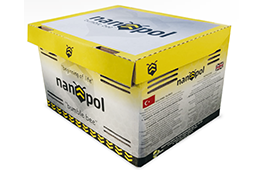
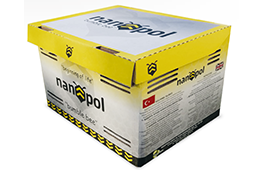
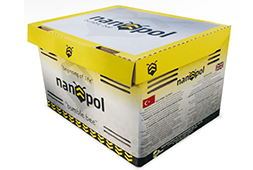
Bumble bee population A standard population of bumble bees contains a bumble bee nest with an active queen and a growing folk. The queen directs the population with the aid of workers that fly out to collect pollenfor the larvae and workers that stay inside the nest to build and feed and care for the larvae. A standard bumble bee population consists of a easily handled cardboard box with a good ventilation system. The box has a compartment with a bumble bee nest and a container of sugar water, where the bees syphon water through a wick.
Pollination with bumblebees in vegetable and fruit cultivation Bumblebees can be used with the different crops in greenhouses as well as vegetable and fruit cultivation. Bumblebees can be used with the following crops in greenhouses.Click on the crops below for more information regarding bumble bees in vegetable or fruit crops.
Vegetable crops Fruit crops - Tomato crops illuminated - Strawberry crops - Tomato crops not illuminated - Melon crops - Zucchini crops - Cherry crops - Sweet pepper crops - Pear crops - Egg plant crops - Apricot crops - Plum crops
Tips for the usage of bumblebees Bumblebees ensure effective pollination within a crop. When making use of bumblebees you are dealing with a living product. This requires a different work method. It is important to check the quality before use and to follow the instructions, you should store the product in a different way and it is recommended to protect yourself against bumblebees when releasing. That is why we provide a number of tips regarding the usage of bumblebees.
Quality control Always make use of materials of an acknowledged producer or distributor who guarantees quality, but before release, also always check the quality of the material yourself. For this purpose, there is useful quality control protocol available. When you identify deviations, always report your complaint within 24 hours, to make adequate response possible.
Read the manual Always read the manual and follow the user instruction carefully. Our product specialists can also advise you from their own experience, about the best application methods to get a maximum return.
Storage of bumblebees Try to use the material as soon as possible (within 18 hours) to get the maximum return. Storage is always at the expense of the quality. If storage is inevitable, make sure that you keep the product in horizontal position (to avoid leaking of sugar water), in the dark and at temperatures from 15 – 22°C. Also ensure good ventilation of the storage facility to prevent too high CO2-concentrations. Improve the functioning of bumblebees by creating conditions in the crop that they can flourish in. Our product specialists will be able to advise you.
Personal protection In general, bumblebees rarely sting, but if they do, this can cause a considerable shooting of pain or sometimes even a (severe) allergic reaction. To prevent being stung by a bumblebee, for example when you release bumblebee hives or feed bumblebees, it is advisable to wear protective clothing. For example, wear a helmet with beekeeper net or an beekeeper pullover and special gloves.
What is the difference between bumblebees and bees?
Let’s first explain: bumblebees and bees belong to the same family, the Aphidae (family: bees and bumblebees). As a consequence, they are very much alike. Still there are some significant differences between bumblebees and bees. Bumblebees are bigger and have more hair on their bodies. This makes them more suitable for pollination than bees. Furthermore bumblebees, in contrast to bees, do not produce honey.
Using bumblebees instead of bees for pollination of a crop has a number of advantages, which are:
At relatively low temperatures (>8⁰C) and with little light (cloudy weather) the bumblebee flies out, something the bee doesn’t do. As such, the bumblebee can be made use of in the spring and the fall.
The flight patterns of the bumblebee are very effective. The bumblebee visits a variety of trees/plants and different rows. This causes a lot of cross-pollination.
The bumblebee is active during much of the day, some 18 hours per day.
Due to the combination of the larger body, the thick coat and the strong, vibrating wings of the bumblebee, a lot of pollen remain on the coat after visiting flowers. This ensures large amounts of pollen to be exchanged between flowers.
In comparison with other bees or wasps, the bumblebee is less aggressive towards people. Bumblebees will hardly ever sting, except when they feel threatened, or when the colony is being attacked.
Bumblebees are also effective in pollination of protected cultivations or covered cultivation (by use of nets).
Bumblebees are not likely to abandon the greenhouse in search for a ‘more attractive’ crop. Other pollinators may alternate sometimes and try to find more attractive plants outside the greenhouse.